NEWEp. 007 — Andrew Carnegie on The man who dies rich dies disgracedListen →
ProfessionalDoer.
The Be · Do · Have Story
BBe· BecomeDDo· ActHHave· Achieve

Success is a
loop.

One person who's done it, a founder, athlete, artist, researcher. Through the Be · Do · Have lens, we trace how they actually got there. 21 minutes. Deliberately.

On Rumble, Spotify, YouTube 21 min, exactly Curated, not scheduled
The 21-minute promise

21 minutes is enough to understand a story.

Most stories don't need 90 minutes. They need a clear shape. The Be · Do · Have framework is how we hold that shape in place. By the end of the interview, you don't just know what happened. You understand how it happened.

The interview structure
2 minWho they are.5 minThe skill they had to learn — the Be.8 minThe thing they actually did — the Do.4 minWhat they got — the Have.2 minWhere to find them.

Long enough for the real story.

Three movements: what they had to learn, what they had to do, what they gained. 21 minutes is enough to trace all three, closely enough to understand how they connect.

Focused on the doing, not the lore.

We're not collecting origin stories. We trace the specific decisions, the small and repeatable ones, that turned the guest's skill into a result.

Designed around understanding.

Every minute is spent moving the listener's understanding of how this person actually did the thing forward. That's the whole job.

21:00
Average runtime: 20:58
14 interviews shipped. The longest was 21:43. We treat the clock as a promise to the guest, and to you.
Latest interview

One doer, 21 minutes.

See all interviews
Founders
EP. 007 · Recorded 1900
21 MIN

The man who dies rich dies disgraced

AC
Andrew Carnegie
Steel Industrialist · Philanthropist · en.wikipedia.org/wiki/Andrew_Carnegie

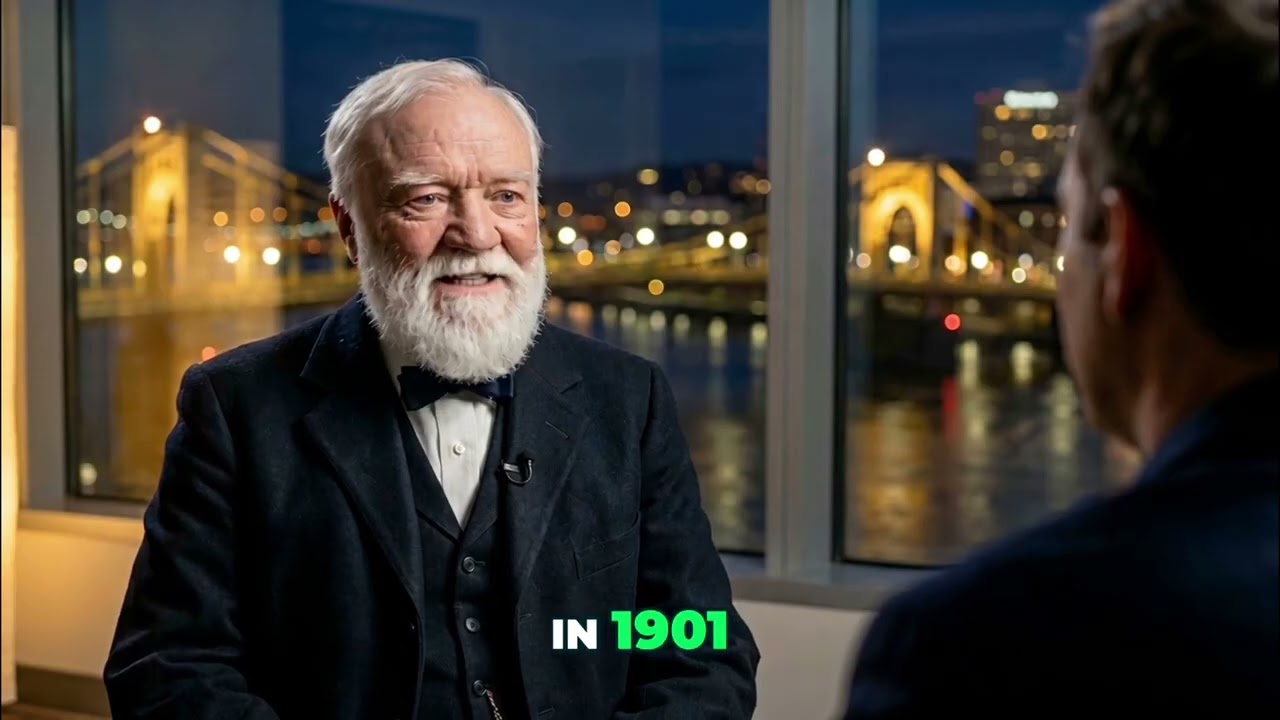
Andrew Carnegie arrived in America at twelve with nothing, worked his first week in a cotton factory for $1.20, and became the richest man in the world. Then he gave almost all of it away. He traces his Be · Do · Have: self-taught learning, building the steel empire, and the promise he kept to a poor boy in a Pittsburgh library.

BeCarnegie arrived in America at twelve unable to afford a single book. Colonel James Anderson opened his personal library of four hundred volumes to the working boys of Allegheny every Saturday. Carnegie was there every week and read every one of them. Self-directed learning was the skill that made everything else possible. The man who does not read works for the man who does, and he decided very early which one he would be. That was the Be.DoCarnegie moved from bobbin boy to telegraph operator to secretary at the Pennsylvania Railroad, treating every job as a school. In 1875 he built his first steel plant near Pittsburgh with borrowed money, living by one rule: watch costs and the profits take care of themselves. He built the first vertically integrated steel company in history, controlling everything from raw material to finished product. In 1901 he wrote the price on a piece of paper and sent it to J.P. Morgan, who said yes without negotiating. The sale was $480 million. That was the Do.HaveCarnegie gave away approximately ninety percent of his fortune, around $350 million, funding 2,500 libraries across the world along with Carnegie Hall and Carnegie Mellon University. He did not do it out of guilt. He did it because a retired merchant once opened four hundred books to a poor boy on a Saturday in Allegheny, and that boy resolved that if wealth ever came to him he would do the same for others. What he truly has is not the steel or the money. It is the promise kept. That is the Have that cannot be taken.
What you get

For people who want to understand the work behind the result.

Every interview follows the same three-act shape (Be, Do, Have) so you can see exactly how someone moved from skill to action to outcome.

A clear story, every time.

Three acts: Be, Do, Have. The guest's actual learning, action, and outcome, laid out in sequence so you can follow exactly how they got there.

Depth, without the padding.

We spend the full 21 minutes on the story itself: the decisions, the dead ends, the moment they had to act. Nothing else.

First-hand understanding.

Every guest has actually lived the thing they're talking about. No analysts, no commentators, just the person who did it.

A real link to their work.

Every interview points you to where the guest lives online. You leave with one new person whose work you can follow.

A written piece you can keep.

The full Be · Do · Have summary, the key quotes, and the links, in a 200-word write-up you can save, share, or come back to.

Curated, not scheduled.

No quota, no filler interview. A new one drops when we find a story worth 21 deliberate minutes. Not a minute before.

Stories we've already understood

Guests whose story we sat with.

The Quiet Build
Ledgerly
Rye & Honey
Monday Letters
smallbiz.house
hirotanaka.vc
Priya Shah Studio
Leo Park Tri
I'd told my story a hundred times and never liked how it sounded. The 21-minute structure finally made it land, and I've been using their write-up on my About page ever since.
Maria VelezEp. 014, Founder of The Quiet Build
I came on to talk about a single race. We ended up mapping eleven months of rehab in a way I'd never been able to articulate. The piece they wrote afterwards is now the first thing my coach sends new athletes.
Daniel OkaforEp. 013, Pro middle-distance runner
The conversation was the easy part. What I didn't expect was how much sharper I felt about my own work afterwards. I'm a better operator for having done it.
Tomás RibeiroEp. 007, CEO of Ledgerly
For listeners

Start with the latest.

Tap play. 21 minutes from now you'll understand the work behind one new person's success.

For guests

If you did it, tell it.

If there is a real story behind what you did, one you can recognize and explain clearly, we want to spend 21 minutes understanding it with you.